Clear Aligner Therapy for General Dentists: A Practical Guide
Clear aligner therapy for general dentists has grown rapidly as patients ask for discreet, removable orthodontic treatment and digital workflows make aligners more accessible. Many general practitioners now offer aligners for mild to moderate cases, often alongside restorative and aesthetic treatment.
However, aligners are an orthodontic appliance, not simply a cosmetic product. Predictable results depend on sound diagnosis, careful case selection and an understanding of how aligners move teeth. This guide covers the essentials: which cases suit a general dentist, how attachments and interproximal reduction (IPR) work, and how to plan treatment safely.
How Do Clear Aligners Move Teeth?
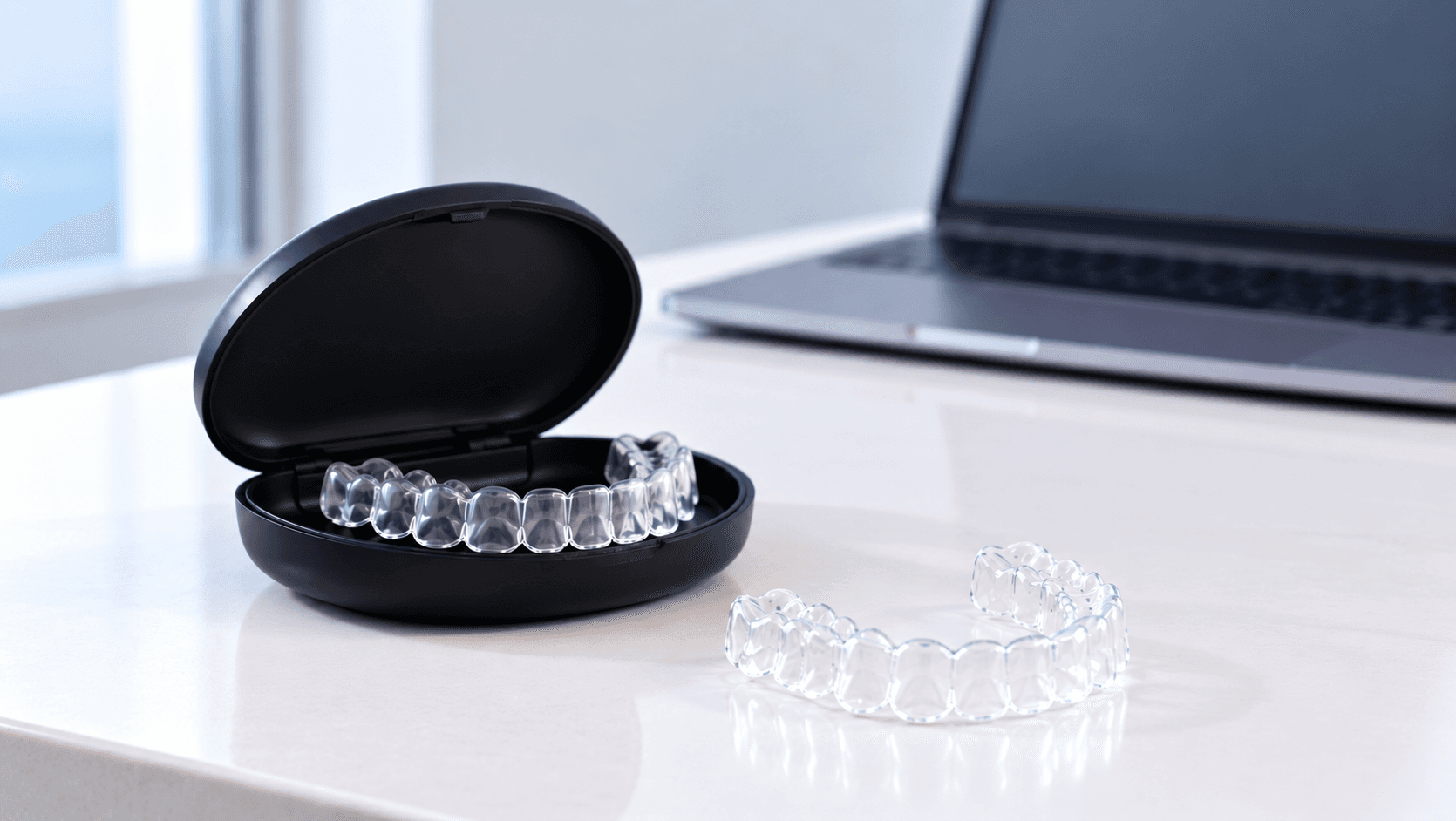
Clear aligners are a series of custom thermoformed trays, each programmed to move teeth by a small increment. The aligner applies force where its shape differs from the current tooth position, and the periodontal ligament and alveolar bone remodel in response, just as with fixed appliances.
Because aligners push rather than pull, some movements are more predictable than others. Tipping, minor rotations of incisors and closing small spaces are generally easier, while extrusion, large rotations of rounded teeth such as canines and premolars, and bodily root movements are more challenging. Auxiliaries such as attachments, elastics and staging strategies are used to improve control.
Patient compliance is critical. Aligners are generally designed to be worn for around 20 to 22 hours a day, removed only for eating, drinking anything other than water and cleaning. Poor wear is one of the most common reasons for tracking problems.
Which Cases Are Suitable for General Dentists?
Case selection is the most important decision you will make. As a general dentist, start with cases that you can diagnose confidently and finish well.
1. Suitable starting cases
Mild crowding or spacing, minor relapse after previous orthodontic treatment, and small alignment corrections before restorative or prosthetic work are often good choices when the skeletal pattern and buccal occlusion are acceptable.
2. Cases needing more experience
Moderate crowding requiring significant expansion or IPR, deep bites, open bites and moderate Class II or Class III dental relationships need greater orthodontic knowledge and careful staging.
3. Cases to refer
Significant skeletal discrepancies, severe crowding requiring extractions with bodily movement, impacted teeth, complex transverse problems and patients who may need orthognathic surgery should usually be referred to an orthodontist.
Before starting any case, the periodontium must be healthy and stable, active caries treated and the patient's expectations realistic.
What Records Are Needed for Aligner Treatment Planning?
Comprehensive records are the foundation of safe treatment planning. These include a full medical and dental history, clinical examination of the teeth, periodontium and temporomandibular joints, extraoral and intraoral photographs, and appropriate radiographs, such as an orthopantomogram, with a lateral cephalogram or other imaging where clinically indicated.
Intraoral scans or accurate impressions are used to create the digital set-up. Evaluate the facial profile, smile arc, midlines, incisor display and arch form before approving any digital plan. The software proposes movements, but the clinician is responsible for deciding whether those movements are biologically and clinically achievable.
What Are Aligner Attachments and When Are They Used?
Attachments are small composite shapes bonded to the labial or buccal surfaces of selected teeth using a template. They give the aligner a surface to push against, improving retention and control of movements that are otherwise difficult.
Attachments are commonly placed to assist extrusion, rotation of rounded teeth, root control and anchorage. Rectangular and bevelled designs are frequently used, and many aligner systems offer optimised attachment shapes generated by the software for specific movements.
Good bonding technique matters: clean and etch the enamel, apply adhesive thinly, fill the template with composite of suitable viscosity and remove excess flash so that the aligner seats fully. Check attachments at each review and replace any that are lost, as missing attachments are a frequent cause of teeth not tracking.
How Should Interproximal Reduction Be Performed?
Interproximal reduction removes a small, planned amount of enamel from proximal surfaces to create space, improve contact shape and reduce black triangles. It is an alternative to expansion or extraction in suitable mild to moderate crowding.
1. Plan the amount carefully
IPR should be prescribed per contact in the digital plan and kept within safe limits of enamel thickness. A commonly cited principle is to remove no more than about half of the proximal enamel.
2. Use appropriate instruments
Hand strips, oscillating systems or fine diamond discs can be used, with thickness gauges to measure the space created. Protect the soft tissues and avoid creating ledges.
3. Finish and protect the surfaces
Polish the reduced surfaces and apply topical fluoride to support remineralisation. Perform IPR at the stage specified in the plan, as timing affects the sequence of tooth movement.
How Should Aligner Treatment Be Monitored?
Regular reviews keep treatment on track. At each appointment, check that every aligner seats fully without air gaps at the incisal edges or cusp tips, that attachments are intact and that the planned IPR has been completed. Ask about wear time honestly and reinforce instructions on cleaning the aligners and avoiding sugary drinks while they are in place.
Compare progress with the digital plan. If teeth are not tracking, stop and identify the cause rather than simply issuing the next aligners. A mid-course correction or refinement scan with a revised set-up is often needed, particularly for rotations and extrusions.
Monitor oral hygiene and periodontal health throughout, as plaque retention under aligners can increase the risk of caries and gingival inflammation in patients with poor home care.
Frequently Asked Questions
Can general dentists provide clear aligner treatment?
Yes, provided they have appropriate training and select cases within their competence. Complex cases should be referred to an orthodontist.
Do all aligner patients need attachments?
Not always. Attachments are planned according to the movements required. Simple cases may need few or none, while complex movements usually require them.
Is IPR harmful to teeth?
When carried out within recommended enamel limits and followed by polishing and fluoride application, IPR is considered a safe procedure. Excessive reduction can compromise enamel, so careful planning is essential.
Why do aligners sometimes stop fitting?
Poor wear time, lost attachments, inadequate IPR or unrealistic planned movements can cause teeth to fall behind the aligner. A refinement scan may be needed to get treatment back on track.
Is retention needed after aligner treatment?
Yes. As with any orthodontic treatment, teeth can relapse, so a retention plan with removable or bonded retainers should be agreed before treatment begins.
Conclusion
Clear aligner therapy for general dentists can be rewarding and predictable when it rests on sound orthodontic principles. Select cases carefully, collect complete records, critically review every digital set-up, and use attachments and IPR thoughtfully. Plan retention from the start and refer complex cases early.
MCDI offers clear aligner training for dentists that covers diagnosis, case selection, digital planning, attachments, IPR and refinements, supported by concise clinical notes. Contact the MCDI team to learn more about our aligner and orthodontic courses.