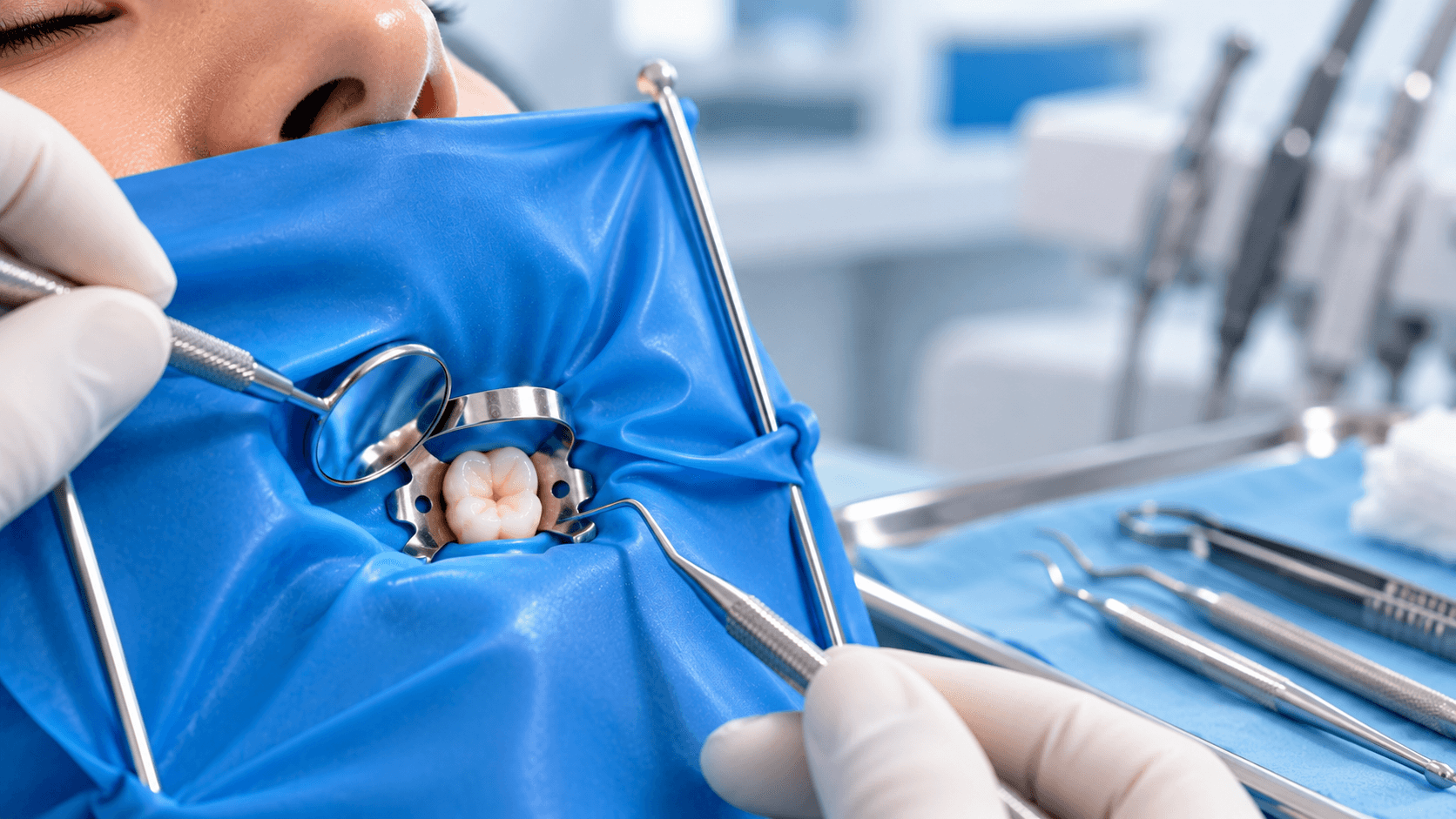
Understanding Rubber Dam Isolation in Dentistry
Rubber dam isolation is an important clinical technique in modern dentistry that helps dentists establish a controlled working environment during selected dental procedures. The technique uses a flexible rubber sheet with appropriate clamps, frames, and accessories to isolate the tooth or treatment area from saliva, moisture, the tongue, cheeks, and surrounding soft tissues. Effective isolation can improve visibility and access while helping dentists maintain better control over the operative field. Rubber dam isolation is particularly relevant in restorative dentistry and endodontics, where moisture control and protection of the treatment area can be important considerations. For dentists developing their clinical dentistry skills after BDS, understanding rubber dam technique involves more than simply learning how to place the sheet. It requires knowledge of case selection, tooth anatomy, clamp selection, isolation methods, patient comfort, and management of different clinical situations. Factors such as tooth position, crown height, contact areas, partially erupted teeth, existing restorations, and accessibility can influence the choice of isolation technique. Developing this knowledge through structured dental education can help dentists understand where rubber dam isolation may be beneficial and how it can be incorporated into an organized clinical workflow. As part of practical dental training, learning fundamental techniques such as rubber dam placement can help dentists strengthen their overall approach to restorative and endodontic procedures while developing greater confidence in clinical practice.
Benefits and Clinical Applications of Rubber Dam Isolation
Rubber dam isolation can provide several clinical benefits when appropriately selected and correctly performed. One of its primary advantages is the ability to create a more controlled field by limiting contamination from saliva and other oral fluids. This can be particularly relevant during restorative procedures where maintaining appropriate working conditions may support adhesive and restorative techniques. Isolation can also improve visibility by keeping the tongue and cheeks away from the operative area, allowing the dentist to focus more closely on the tooth and treatment site. In endodontic treatment, rubber dam isolation is commonly incorporated into the clinical workflow to establish a controlled treatment field and provide a barrier between the oral cavity and the area being treated. It can also contribute to patient safety by helping reduce the risk of accidental swallowing or aspiration of small instruments and materials. However, effective rubber dam isolation depends on appropriate case assessment and technique rather than simply placing the rubber sheet. Dentists should consider the procedure being performed, tooth anatomy, accessibility, patient factors, and the requirements of the treatment before selecting an isolation method. Understanding these clinical considerations is especially valuable for dentists pursuing advanced dental training because it allows them to connect theoretical knowledge with practical decision-making. Exposure to different clinical cases can also help dentists understand how isolation techniques may need to be adapted according to individual treatment requirements, making rubber dam isolation a useful component of broader clinical dentistry training.
Developing Practical Dental Skills Through Clinical Training
Practical clinical training helps dentists transform theoretical knowledge into confident clinical practice. At Master Clinical Dentistry Institute (MCDI), structured dental education focuses on strengthening clinical knowledge, practical skills, and treatment planning abilities. MCDI courses provide dentists with opportunities to continue learning and develop skills relevant to modern dental practice.