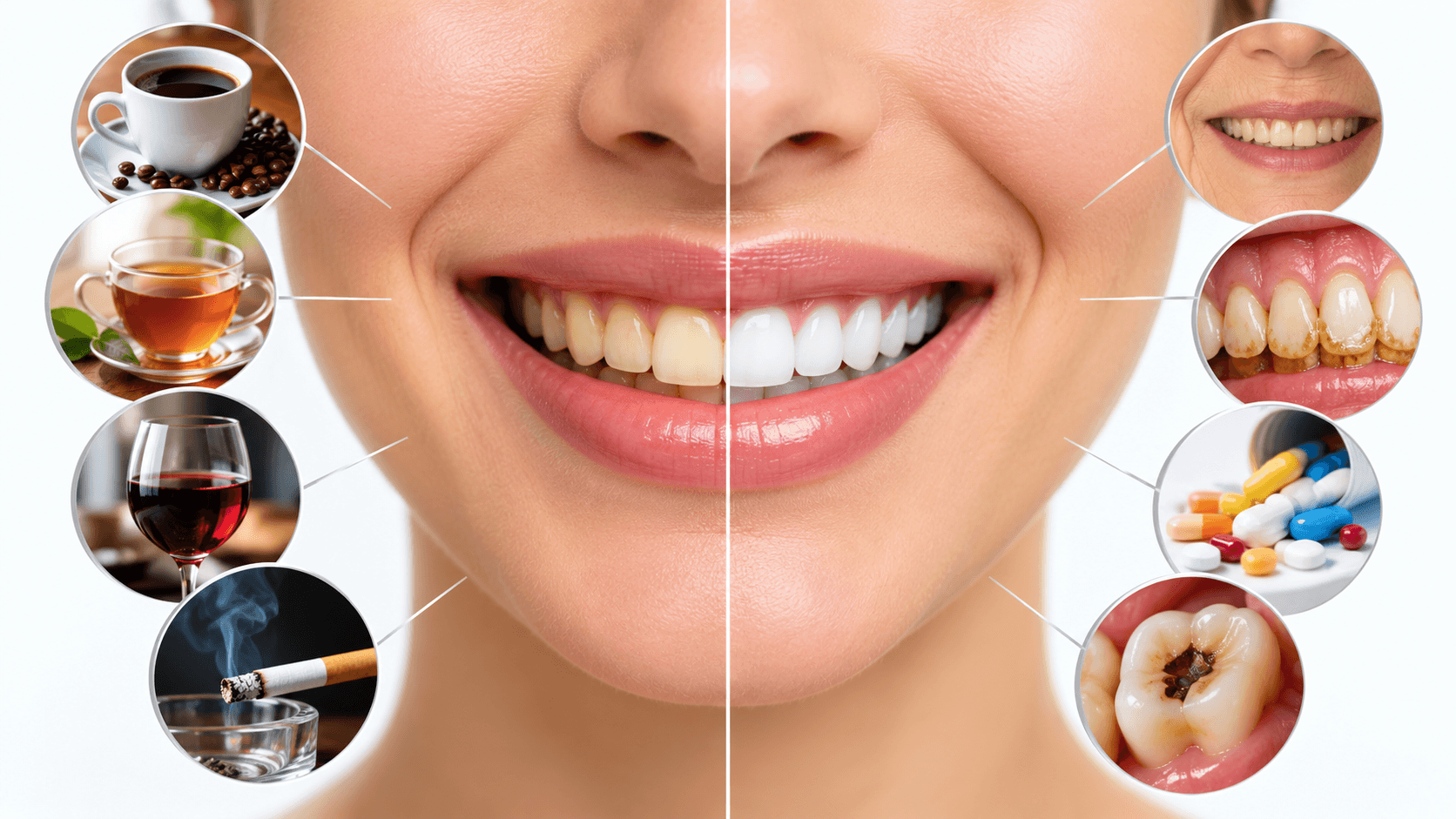
Why Do Teeth Change Color? Common Causes of Tooth Discoloration
A bright, healthy-looking smile is important to many people, but teeth can naturally change color over time. Tooth discoloration may appear as yellow, brown, grey, or darker areas on one or more teeth. Some discoloration is caused by surface stains, while other changes can occur within the tooth itself.
Understanding the cause of teeth discoloration is important because the appropriate treatment depends on why the color has changed.
Common Causes of Tooth Discoloration
1. Food and Beverages
Coffee, tea, cola, red wine, berries, and other strongly colored foods can stain the outer surface of teeth. Frequent exposure to these foods and drinks may gradually make teeth appear darker or yellow.
2. Poor Oral Hygiene
Inadequate brushing and cleaning between the teeth can allow plaque and tartar to accumulate. This can make teeth look yellow or dull and may also contribute to cavities and gum disease.
3. Smoking and Tobacco
Smoking and tobacco use can cause persistent yellow or brown stains on the teeth. With continued exposure, these stains may become more difficult to remove through regular brushing.
4. Natural Aging
Teeth can become darker with age. The outer enamel naturally becomes thinner over time, allowing the naturally yellowish dentin underneath to become more visible. This is one reason why older teeth may appear less white.
5. Tooth Decay and Dental Problems
Cavities and other dental conditions can cause localized changes in tooth color. A damaged tooth may develop a brown, grey, or dark appearance and should be examined by a dentist.
6. Trauma to a Tooth
An injury to a tooth can sometimes affect the tissues inside it and lead to a gradual change in color. A single tooth becoming noticeably darker may require professional dental evaluation.
7. Medications and Fluorosis
Certain medications taken during tooth development and excessive fluoride exposure during childhood can cause intrinsic tooth discoloration. These changes may appear as white, brown, or mottled areas on the teeth.
How to Prevent Tooth Discoloration
Good oral hygiene and preventive dental care can help reduce staining. Brush twice daily with fluoride toothpaste, clean between the teeth regularly, limit frequent consumption of highly pigmented foods and drinks, and avoid tobacco products.
Regular dental check-ups and professional cleaning can help identify plaque, tartar, cavities, and other causes of discoloration at an early stage.
Treatment for Discolored Teeth
Treatment depends on the underlying cause. Professional dental cleaning may help remove surface stains and deposits. For suitable patients, professional teeth whitening can improve certain types of external discoloration.
However, whitening is not appropriate for every type of stain. Intrinsic discoloration, decay, trauma, or enamel problems may require other dental treatments after proper examination.
Conclusion
Tooth discoloration can result from everyday habits, food and beverages, aging, oral hygiene problems, tobacco use, trauma, medications, or dental conditions. Identifying the cause is the first step toward choosing an appropriate treatment.
If a tooth suddenly becomes dark, grey, or significantly different in color, it is advisable to have it examined by a dentist rather than relying only on whitening products.