Why Consider a Clinical Dentistry Course?
Completing BDS or MDS provides dentists with important academic and clinical knowledge, but professional learning continues throughout a dental career. Dentists may encounter procedures, treatment-planning situations and clinical challenges that require additional practical training.
A clinical dentistry course can help bridge the gap between theoretical knowledge and everyday clinical practice. The right programme should be selected according to the dentist's experience, interests and specific learning requirements.
Look at the Training, Not Just the Certificate
Before choosing a course, dentists should look beyond the course title and certificate. The curriculum should clearly explain what will be taught and how the learning will take place.
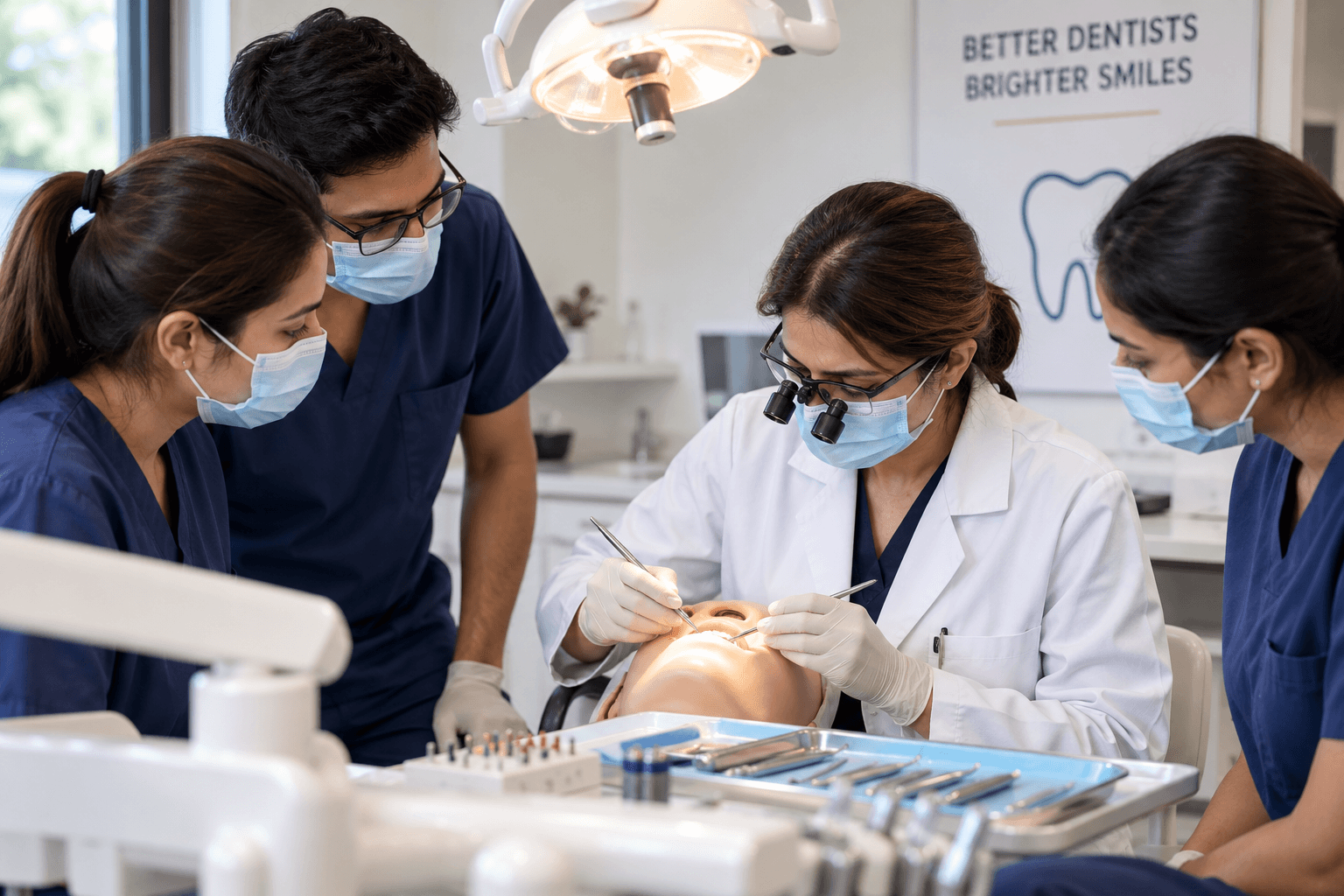
For procedure-based dentistry, hands-on dental training can be particularly valuable. Practical exposure allows dentists to become familiar with instruments, materials, techniques and clinical protocols. When patient-based training is included, appropriate case selection and experienced supervision are important considerations.
The faculty is another important factor. Experienced clinical mentors can help dentists understand treatment planning, case selection, complications and practical aspects that may not be covered in textbooks.
Choose According to Your Clinical Goals
The right course depends on what a dentist wants to achieve. A BDS graduate may benefit from comprehensive clinical training, while an experienced dentist may prefer focused education in implantology, endodontics, prosthodontics, restorative dentistry or digital dentistry.
Online learning can be useful for theoretical education and flexible study, while classroom and hands-on programmes can provide direct interaction with faculty and practical experience. The choice should depend on the subject and the dentist's learning objectives.
The Value of Continuing Dental Education
Continuing education should ultimately help dentists apply knowledge more confidently in clinical practice. A useful programme should improve understanding of diagnosis, treatment planning, clinical procedures and patient management rather than simply provide another certificate.
For dentists searching for clinical dentistry courses after BDS or MDS, comparing curriculum, faculty, practical exposure and supervision can help them select training that is relevant to their professional goals.
Conclusion
Choosing a clinical dentistry course is an important professional decision. Dentists should consider what they want to learn, how much practical exposure is provided and whether the faculty can offer meaningful clinical guidance.
The right clinical dental training can help transform theoretical knowledge into practical skills and support continued professional development throughout a dentist's career.
Frequently Asked Questions
Which clinical dentistry course is suitable after BDS?
It depends on the dentist's clinical goals. Options may include comprehensive dentistry, endodontics, implantology, prosthodontics, restorative dentistry and digital dentistry.
Is hands-on training important?
Yes. Practical training can help dentists develop familiarity with clinical procedures, instruments, materials and treatment protocols.
What should I check before joining a dental course?
Review the curriculum, faculty, duration, practical exposure, patient training and clinical supervision, and make sure they match your learning objectives.
Can MDS dentists also benefit from clinical courses?
Yes. MDS dentists can use continuing education to strengthen practical skills, learn newer techniques or develop additional areas of clinical expertise.