Infection Control in Dental Practice: Essential Protocols for Safe Clinical Dentistry
Infection prevention is an essential responsibility in every dental practice. Dentists, dental assistants, hygienists, laboratory personnel, and patients can potentially be exposed to microorganisms during clinical procedures. Following appropriate infection control in dentistry helps reduce the risk of cross-contamination and supports a safer clinical environment.
Dental procedures frequently involve contact with saliva, blood, oral tissues, instruments, and contaminated surfaces. For this reason, infection control should not be treated as an isolated procedure performed only after treatment. It should be incorporated into every stage of dental practice, from preparation of the operatory to instrument processing and clinical waste disposal.
Why Is Infection Control Important in Dental Practice?
A dental clinic involves frequent contact between patients, dental instruments, treatment surfaces, and clinical personnel. Without appropriate infection prevention measures, microorganisms can potentially be transferred between people or contaminated areas.
Effective dental infection control involves a combination of standard precautions, appropriate personal protective equipment, instrument sterilization, environmental cleaning, hand hygiene, safe handling of sharps, and proper disposal of clinical waste.
The objective is to establish consistent protocols that protect both the dental team and patients. Every member of the dental team should understand their role in maintaining these standards rather than relying on one person to manage infection control.
What Are the Main Components of Dental Infection Control?
1. Hand Hygiene
Hand hygiene is one of the fundamental elements of infection prevention. Hands should be cleaned appropriately before and after patient contact and whenever contamination may have occurred.
Proper hand hygiene is particularly important when moving between patients or between different stages of a clinical procedure.
2. Personal Protective Equipment
Appropriate personal protective equipment can provide a barrier between dental professionals and potentially infectious materials.
Depending on the procedure, PPE may include:
Gloves Masks Protective eyewear Face shields Protective clothing
PPE should be used appropriately and changed or removed according to established infection-control procedures.
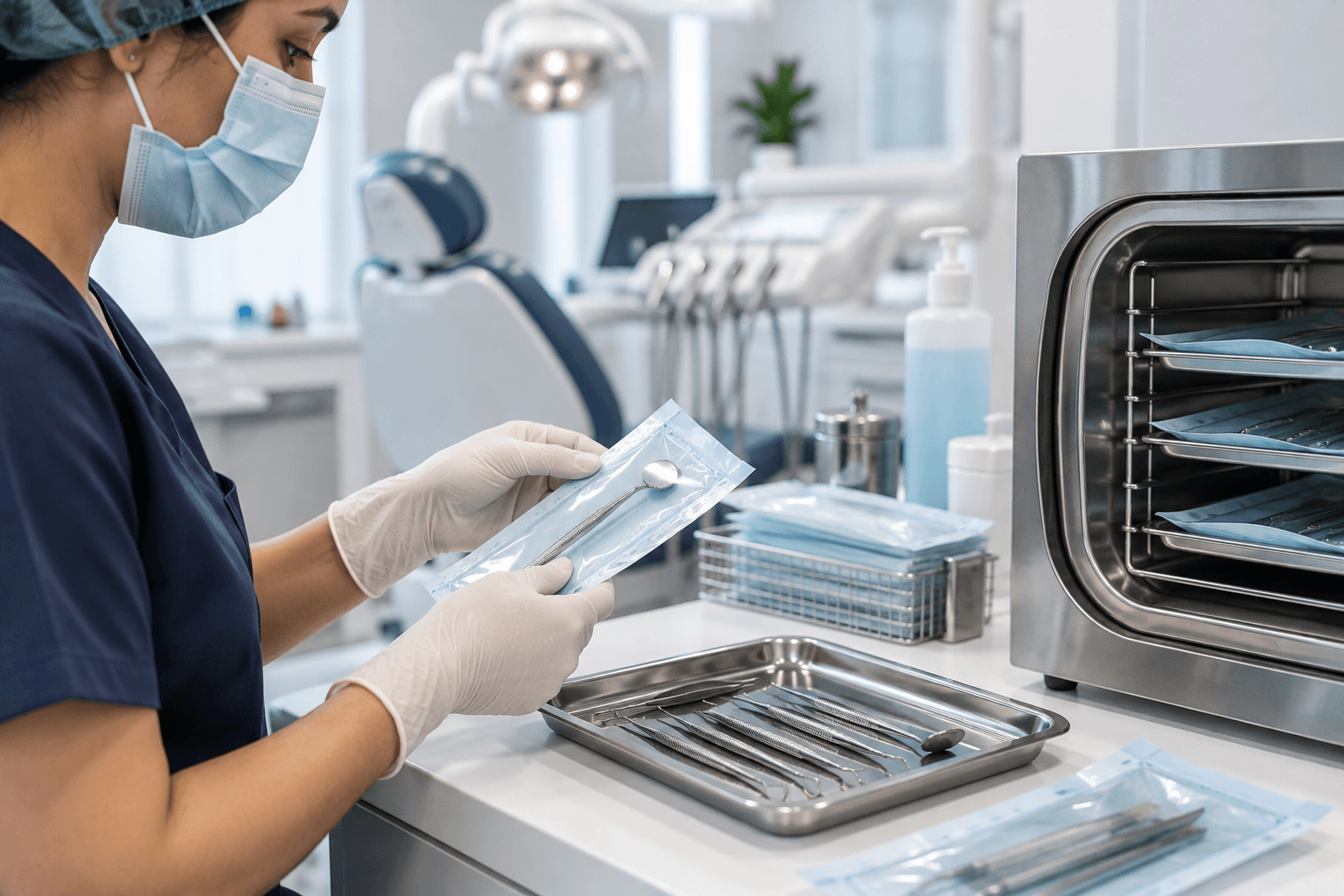
3. Instrument Sterilization
Reusable dental instruments require appropriate cleaning and sterilization before being used for another patient.
A typical instrument-processing workflow includes:
Cleaning → Inspection → Packaging → Sterilization → Storage
Cleaning is important because organic material can interfere with effective sterilization. Instruments should therefore be appropriately cleaned and prepared before sterilization.
4. Surface Disinfection
Dental treatment areas can become contaminated during clinical procedures. Frequently touched surfaces and equipment should therefore be appropriately cleaned and disinfected according to the manufacturer's instructions and established infection-control protocols.
Maintaining a consistent environmental cleaning routine can help reduce opportunities for cross-contamination.
5. Safe Sharps Handling
Needles, blades, burs, and other sharp instruments require careful handling. Dental professionals should follow appropriate procedures for handling, transporting, and disposing of sharps.
Used needles and other contaminated sharps should be placed in suitable puncture-resistant containers rather than being left on treatment surfaces.
How Can a Dental Practice Improve Infection Control?
A successful infection control protocol in dentistry depends on consistency. Even a well-designed protocol is ineffective if it is not followed during everyday clinical practice.
Dental practices can strengthen infection prevention by establishing clearly defined procedures for:
Before the patient arrives: Prepare the treatment area, required instruments, barriers, and protective equipment.
During treatment: Follow appropriate hand hygiene, PPE, aseptic technique, instrument handling, and surface-control procedures.
After treatment: Remove contaminated materials safely, process instruments correctly, disinfect appropriate surfaces, and prepare the operatory for the next patient.
During instrument processing: Clean, inspect, package, sterilize, and store instruments according to established protocols.
During waste management: Separate and dispose of clinical waste and sharps using appropriate containers and procedures.
Common Infection Control Mistakes to Avoid
Even when dental professionals understand the importance of infection prevention, inconsistent routines can create avoidable risks.
Inadequate Hand Hygiene Failure to perform appropriate hand hygiene at the correct stages of patient care can increase the possibility of cross-contamination.
Incorrect Instrument Processing Instruments should not simply be placed into a sterilizer without appropriate cleaning and preparation. Effective instrument processing requires a systematic workflow.
Reusing Disposable Items Single-use items should be handled and discarded according to their intended use and applicable clinical protocols.
Poor Surface Management Frequently touched areas can become contaminated during treatment. A consistent surface-cleaning and disinfection protocol is therefore important.
Incorrect Sharps Disposal Sharps should be disposed of immediately and safely in appropriate containers to reduce the risk of accidental injury.
Quick Dental Infection Control Checklist
Before starting treatment:
Perform appropriate hand hygiene. Prepare the clean treatment area. Arrange sterilized instruments appropriately. Use suitable personal protective equipment. Confirm that necessary clinical barriers and supplies are available.
During treatment:
Maintain appropriate aseptic practices. Handle instruments carefully. Avoid unnecessary contact with clean surfaces using contaminated gloves. Dispose of sharps safely. Follow established infection-control procedures throughout treatment.
After treatment:
Dispose of contaminated disposable materials appropriately. Process reusable instruments correctly. Clean and disinfect relevant treatment surfaces. Remove or change protective barriers as required. Prepare the clinical area for the next patient.
Infection Control and Dental Clinical Training
Understanding infection control is an important part of developing competent clinical dentistry skills. Dentists and dental team members need both theoretical knowledge and practical understanding of how infection-control protocols are incorporated into everyday procedures.
Dental education and hands-on training can help professionals understand instrument processing, sterilization, clinical safety, environmental disinfection, personal protective equipment, and safe patient-care workflows.
At Master Clinical Dentistry Institute (MCDI), practical dental education focuses on developing clinical knowledge and skills that dentists can apply in their professional practice. Strong infection-control principles form an important foundation for maintaining a safe and professional dental environment.
Key Takeaways
Infection control is an essential component of safe dental practice.
Hand hygiene is one of the fundamental elements of infection prevention.
Appropriate personal protective equipment helps protect dental professionals and patients.
Reusable dental instruments require proper cleaning, preparation, sterilization, and storage.
Dental treatment surfaces should be appropriately cleaned and disinfected.
Sharps must be handled and disposed of using appropriate safety procedures.
Consistent infection-control protocols help reduce the risk of cross-contamination.
Practical dental training can help dental professionals develop stronger awareness of clinical safety and infection prevention.
Frequently Asked Questions
What is infection control in dentistry? Infection control in dentistry refers to the practices and procedures used to prevent the spread of microorganisms and reduce the risk of cross-contamination during dental treatment.
Why is sterilization important in dental practice? Sterilization is an important part of processing reusable dental instruments and helps ensure that instruments are appropriately prepared before use with another patient.
What personal protective equipment is commonly used in dentistry? Depending on the procedure, dental professionals may use gloves, masks, protective eyewear, face shields, and protective clothing.
What is the difference between cleaning, disinfection, and sterilization? Cleaning removes contaminants and organic material, disinfection reduces microorganisms on appropriate surfaces, and sterilization is a process designed to eliminate all forms of microbial life from properly processed instruments.
How can dentists improve infection control? Dentists can improve infection control by establishing consistent protocols for hand hygiene, PPE, instrument processing, surface disinfection, sharps management, and clinical waste disposal.
Conclusion
Effective infection control in dental practice requires consistent attention to every stage of patient care. From hand hygiene and personal protective equipment to instrument sterilization, environmental disinfection, and sharps management, each component contributes to a safer clinical environment.
For dentists and dental teams, infection prevention should become an integral part of everyday clinical practice rather than an occasional task. Developing clear protocols and regularly strengthening knowledge through dental education and clinical training can help maintain high standards of patient and workplace safety.
Master Clinical Dentistry Institute (MCDI) supports practical, career-oriented dental education that helps dentists strengthen their clinical knowledge and develop skills relevant to modern dental practice.