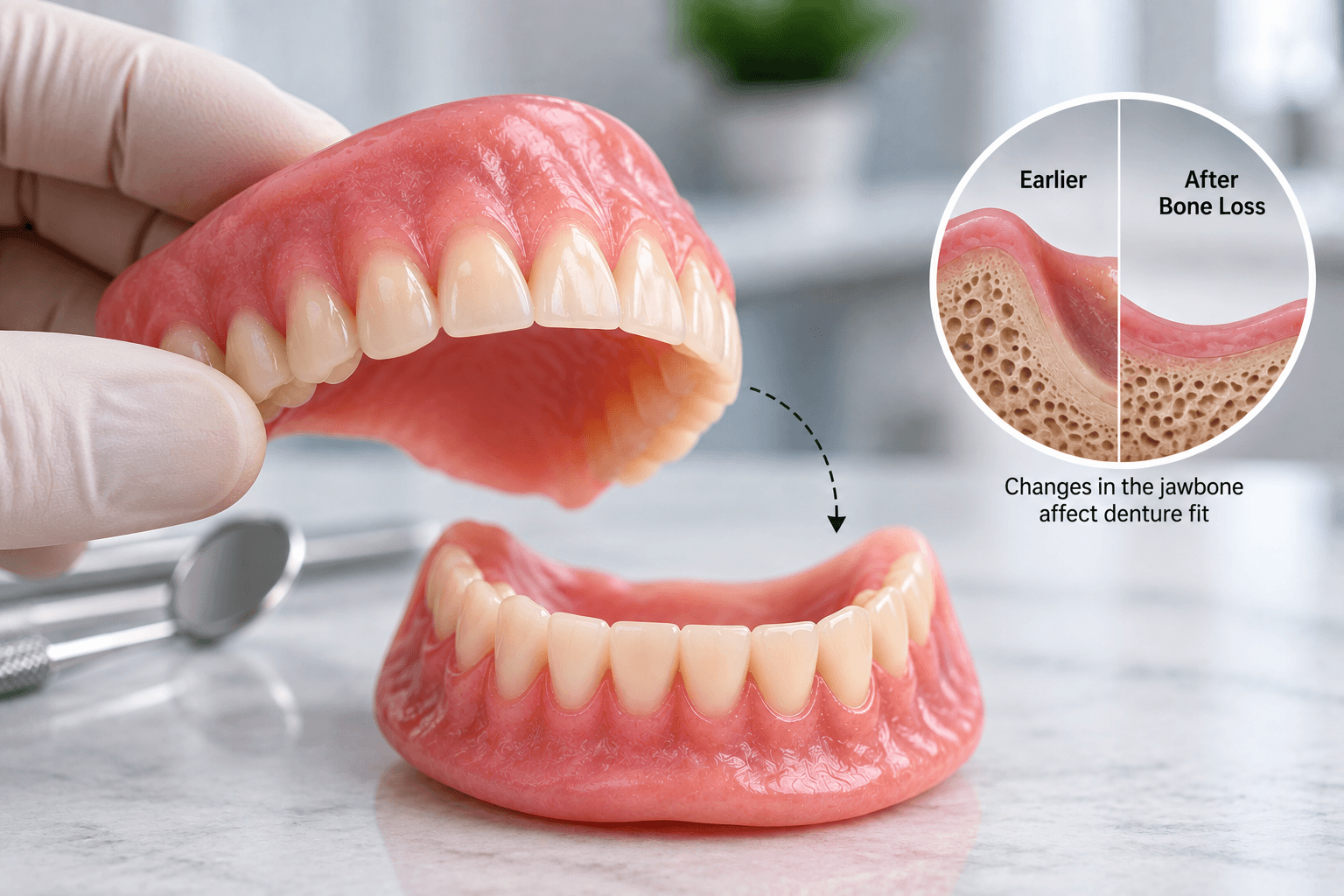
Why Do Dentures Become Loose? Understanding Denture Fit and Retention
Dentures help restore chewing, speech, facial support, and appearance after tooth loss. However, a denture that fits well initially may gradually become loose and move while eating or speaking. Understanding the reasons for changing denture fit and retention is important for maintaining comfort and function.
1. Why Do Dentures Become Loose Over Time?
The most common reason is jawbone resorption. After natural teeth are removed, the bone supporting those teeth gradually changes in shape and volume. The gums and other soft tissues can also change over time, affecting the foundation on which the denture rests.
Other factors may include worn denture teeth, changes in the denture base, an inadequate original fit, and reduced saliva.
2. How Can Loose Dentures Affect Daily Life?
Poorly fitting dentures may move while eating, speaking, or laughing. Patients may experience difficulty chewing, altered speech, sore spots, gum irritation, or reduced confidence when wearing their dentures.
A denture that repeatedly moves should be professionally evaluated rather than simply tolerated.
3. How Can Denture Fit and Retention Be Improved?
The appropriate treatment depends on the condition of the denture and the changes in the supporting tissues. Minor fit problems may require adjustment; tissue changes may require relining; severely worn or damaged dentures may need replacement; and significantly reduced retention may require evaluation for implant-supported dentures.
For suitable patients, implant-supported dentures can provide additional support and stability compared with conventional removable dentures.
4. When Should Dentures Be Checked?
A dental evaluation is recommended when dentures become loose, uncomfortable, damaged, or difficult to chew with. Regular examinations allow the dentist to assess the denture, oral tissues, bite, and overall oral health.
Using denture adhesive may provide temporary additional retention in some situations, but it should not be used to compensate for a significantly ill-fitting denture.
Conclusion
Loose dentures are often related to natural changes in the jawbone and oral tissues rather than simply the age of the denture. Early assessment can help determine whether denture adjustment, relining, replacement, or implant-supported treatment is appropriate.
Frequently Asked Questions
Can dentures become loose over time? Yes. Changes in the jawbone and soft tissues can gradually affect how well a denture fits.
Can loose dentures be adjusted? Yes. Depending on the cause, a dentist may recommend adjustment or relining to improve the fit.
When should dentures be replaced? Replacement may be considered when dentures are severely worn, damaged, poorly fitting, or no longer provide adequate function.
Are implant-supported dentures more stable? Implant-supported dentures can provide additional retention and stability for appropriately selected patients.
Can I use denture adhesive for loose dentures? Denture adhesive can provide additional temporary retention in some cases, but a significantly loose denture should be professionally assessed.